 The War Between Men and Lemmon
The War Between Men and Lemmon
The War Between Men and Lemmon

|
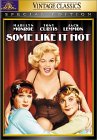
Many of his most popular and acclaimed roles - from the start of his career to the height of his success - parody society's dominant ideas of sexuality in the 1950s and 60s. Importantly, they draw their comedy from showing the difference between the new sexual gratification these ideologies promised for men and the real situation for everyday Americans. And in several performances, Lemmon illustrates the problems of the man who doesn't want to conform to these new libertarian discourses anyway. Lemmon frequently plays an 'ordinary' American middle class man who comes into contact with progressive sexual and societal beliefs. Sometimes he rejects them: In It Should Happen To You (1954), he is unhappy when girlfriend Judy Holliday becomes famous on glamorous talk shows and commercials because he wants them to enjoy a simple life together. In Phfft (1954), he's an attorney whose divorce from Holliday only reinforces his desire to be with her. In Good Neighbor Sam (1964), he's a married advertising executive who pretends to be another woman's husband so she can claim an inheritance - but complications arise when his boss uses him to front a campaign stressing American family values. In other instances, the Lemmon character enjoys sexual liberation: In Irma La nouce (1963), he's a cop who falls for prostitute Shirley MacLaine and becomes her pimp. He escapes from a troubled American marriage after a night of adventure with Catherine Deneuve in The April Fools (1969). And in Avanti! he plays an uptight American businessman who meets uninhibited Juliet Mills and learns to let his hair down. Sometimes his movies' satire of sexual gratification has seemed soft. One critic called the James Thurber-inspired The War Between Men and Women (1972) ‘the exact antithesis of everything the tough-minded Thurber held dear' (1) But the films have also provoked critical outrage for their harshness. Hence, Bosley Crowther complained that How to Murder Your Wife (1965) was "so completely anti-marriage ...that women might be expected to charge it with their slivering fingernails"; and John McCarten complained of the "grey-flannel beatniks" in The Apartment (1960) (2). Here we take a look at three Lemmon performances which are among his most radical. Quite a girl: Some Like It Hot (1959) When musicians Tony Curtis and Jack Lemmon dress up as women to escape the mafia, they take to their disguises in very different ways. Curtis - as Joe/Josephine - is initially set against them getting involved with any of the women in the band. But then he falls for singer Sugar (Marilyn Monroe), and effectively spies on her when he's in drag, gathering information which he uses in adopting a disguise as the millionaire of her dreams. However, Lemmon - as Jerry/Daphne - undergoes a very different change in character. In his early scenes with Sugar, he finds it almost impossible to control his male urges, and draws an analogy with his childhood dream of being locked in a pastry shop. But after an evening dancing with the millionaire Osgood Fielding (Joe E. Brown), the Daphne part of his character takes over almost completely: he comes back still dancing and boasting of being engaged. When Curtis asks "Who's the lucky girl ? " he replies: "I am." Although Jerry later claims he's planning to marry Osgood so he can get a quick annulment and live off the alimony, Lemmon's interpretation makes it clear there's something more dangerous going on. Whether the Daphne side of his personality has been unleashed in Freudian fashion from his subconscious, or whether it has just developed, it's clear that Jerry is having trouble repressing Daphne. In the early scenes when he shares a bunk with Sugar, he repeats to himself "I'm a girl, I'm a girl"; now he has to keep saying "I'm a boy, I'm a boy." It has been argued that Some Like It Hot does not fulfil its subversive potential because Billy Wilder's camera never invites us to look at Joe/Josephine or Jerry/Daphne as potential objects of desire the way it presents Marilyn Monroe. When male characters look at Sugar, the camera encourages us to share their gaze. But when Osgood and the licentious bellboy gaze lustily at Daphne and Josephine, the camera does not adopt the onlookers' point of view. These criticisms are valid, but they should not be allowed to overshadow the taboos which Lemmon's role does break. Whereas Curtis always seems like a man pretending to be a woman, Lemmon is a man transformed into a woman and finding it a natural and happy state. Annette Kuhn has argued that films about
crossdressing could potentially do more than any other Hollywood product
to transgress perceptions of gender roles. But she claims that:
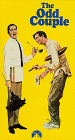
Felix the nut: The Odd Couple (1968) Gene Saks' film of the Neil Simon play has Lemmon and Walter Matthau in what ought to be an ideal situation, if the sexual discourses of the time are to be believed. Divorce has severed them from their wives and kids, and they're free to bring all the women they want back to their big bachelor pad. But things aren't as simple as that, largely because Lemmon as the sensitive Felix can't forget about his nuclear family. Matthau's Oscar is the would-be playboy, who flirts with women and whose marriage failed because of his selfishness. He recalls: "For our tenth wedding anniversary, I took her to the New York Rangers-Detroit Redwings hockey game where she got hit by a puck." Lemmon as Felix, however, can't accept sexual liberation. Oscar refers to his friend as "Felix the nut", and Felix is almost unique among the men in the film in being constantly concerned for his wife and children. "Divorce is much harder on the woman," he says. "How's she going to meet somebody new?" In a decade in which married men were supposed to desire affairs, Felix can't even be 'unfaithful' to the wife who's thrown him out. But, frustratingly for Oscar, Felix's sensitivity works better on women than the playboy approach. Whereas Oscar tries to charm a pair of English sisters from the apartment upstairs, Felix reduces them - and himself - to tears with talk about his children, and later goes to stay with them. Lemmon's performance is also significant for the aspects of the role it doesn't exaggerate. Felix is a compulsive cleaner and a proud cook, but there is no attempt to turn the character into a homophobic stereotype or a limp-wristed 'wifey' figure of fun, even though Oscar complains that "I'm cooped up in here with Mary Poppins twenty-four hours a day." Felix and Oscar just get on each other's nerves: although they end up accidentally calling each other by their wives' names, the sub-text doesn’t point to a caricature of a gay lifestyle. Felix's marriage is shown to have been a disaster, not because he lacked masculinity, but because of the impossibility of different temperaments getting on together: Felix and Frances, Oscar and Blanche, Felix and Oscar. Some shnook from the office: The Apartment (1960) Rather than deal with these performances chronologically, the best has been saved till last. One of the reasons for Apartment's greatness is that, as well as showing the differences between libertarian sexual discourses and ordinary experience, it shows the whole hypocrisy to be hopelessly tied up with American business and the rat race. Lemmon is C.C. 'Bud' Baxter, who has the edge over the other 31,258 employees at Consolidated Life Insurance because he is lending his apartment out to philandering executives. Company boss J.D. Sheldrake describes him to his face as "loyal, resourceful, cooperative C. C. Baxter", but behind his back he is variously referred to as a "little punk" and "some shnook who works at the office." Much of the comedy comes from the fact
that Baxter's landlady and neighbours think he's living a hedonistic life
because they hear music and laughter coming from his apartment and see
stacks of empty liquor bottles. Richard Dyer has written of the Playboy
discourse, which in the 1950s promoted sexuality as guiltless and natural:
When Baxter tells a woman "you are now alone with a notorious sexpot", he's telling the truth - except that his notoriety is entirely ill-founded. Ironically, Baxter even bears the brunt of the neighbourly disgust which should be aimed at the adulterous executives: his landlady calls him King Farouk, his neighbour asks him to leave his body to science, and he receives a slug in the mouth when he pretends it's he, rather than Sheldrake, who's been having an affair with Fran Kubelik (Shirley MacLaine). The Apartment demonstrates the effect on women when businessmen behave according to the Playboy discourse. Fran is made to feel like a prostitute and tries to kill herself, whilst only Baxter and his neighbours care what happens to her. Baxter waits on her whilst she recovers from her overdose, and she calls him 'nurse'. Business rank dominates all the relationships in The Apartment. The executives have affairs with secretaries, telephonists and (in Fran Kubelik's case) elevator operators. Baxter is elevated from a lowly position to senior management by allowing extra-marital sex to go on in his apartment, and when he ceases to do favours for the executives, he is warned: "We made you and we can break you." Office formality even dictates the way C.C. Baxter and Fran talk to each other: they address each other as Mr Baxter and Miss Kubelik even after he's saved her from death. Big business in The Apartment is more corrupt the higher up the corporate ladder Baxter goes. Whilst the secretaries and lift operators are honest, the bosses are deceitful and corrupt. Baxter tells Sheldrake that only four employees out of the 31,259 are involved in his apartment-sharing scam, so "we can be very proud of ourselves, percentage-wise." But the rotten ones are the most powerful. Sheldrake, the head of the company, is the most corrupt of all the bosses. When he first hears of the interest in Baxter's apartment, he lectures him that "an insurance company is founded in public trust" but then demands a key. Eventually, unable to bear the hypocrisy any longer, Baxter walks out of a job as Sheldrake's assistant -prompting Fran to finally choose him over Sheldrake. Lemmon becomes the worm that turned, living out every office worker's fantasy of walking out of the whole system. He's realised the way the rat race operates. Fran delivers the film's best critique of America's work and sex ethic: "Some people take, some people get took." REFERENCES 1. Paul D. Zimmerman, Newsweek, quoted in Joe Baltake, Jack Lemmon - His Films and Career, London: Columbus, 1986, p. 200. Return. 2. Crowther, New York Times; McCarten, New Yorker; quoted ibid., pp. 157, 112. Return. 3. Annette Kuhn, Women's Pictures: Feminism and Cinema, London: Routledge and Kegan Paul, 1982, pp. 56-57. Return. 4. Richard Dyer, Heavenly Bodies: Film Stars and Society, London, BFI/MacMillan, 1987. Return. FILMOGRAPHY It Should Happen To You (1954): George
Cukor. Phfft: Mark Robson. Three For the Show (55): H.C. Potter. Mister
Roberts (55): John Ford and Mervyn LeRoy. My Sister Eileen (55): Richard
Quine. You Can't Run Away From It (56): Dick Powell. Five Down Below (57):
Robert Parrish. Operation Mad Ball (57): Quine. Cowboy (58): Delmer Daves.
Bell~ Book and Candle (58): Richard Quine. Some Like It Hot (59): Billy
Wilder. It Happened To Jane (re-release title: Twinkle and Shine)(59):
Quine. The Apartment (60): Wilder. Pepe (60): George Sidney. The Wackiest
Ship in the Army (61): Richard Murphy. Stowaway in the Sky (aka: Le Voyage
en ballon)(62): Albert Lamorisse. The Notorious Landlady (62): Quine. Days
of Wine and Roses (62): Blake Edwards. Irma La Douce(63): Wilder. Under
the Yum-Yum Tree (63): David Swift. Good Neighbour Sam(64): Swift. How
To Murder Your Wife(65): Quine. The Great Race (65): Edwards. The Fortune
Cookie (66): Wilder. Luv (67): Clive Donner. The Odd Couple (68): Gene
Saks. The April Fools (69): Stuart Rosenberg. The Out-of-Towners (70):
Arthur Hiller. Kotch (71): Jack Lemmon (director only). The War Between
Men and Women (72): Melville Shavelson. Avanti! (72): Wilder. Save the
Tiger (73): John G. Avildsen. Wednesday(short, 74): Marv Kupfer. The Front
Page (74): Wilder. The Prisoner of Second Avenue (75): Melvin Frank. The
Entertainer (TV, 76): Donald Wrye. Alex and the Gypsy: (76): John Korty.
Airport '77 (77): Jerry Jameson. The China Syndrome (79): James Bridges.
Tribute (79): Bob Clark. Buddy Buddy (81): Wilder. Hissing (82): Costa-Gavras.
Mass Appeal (84): Glenn Jordan. Macaroni (aka: Maccheroni) (85): Et tore
Scola. That's Life (86): Edwards. Dad (89): Gary David Goldberg. JFK (91):
Oliver Stone. The Player (92): Robert Altman (bit). Glengarry Glen Ross
(92): James Foley. Short Cuts (93): Robert Altman. Grumpy Old Men (or Grumpier
Old Men) (93): Donald Petrie. The Grass Harp (95): Charles Matthau. Grumpy
Old Men 2 (95): Howard Deutch. Getting Away with Murder (96):Harvey
Miller. My Fellow Americans (96): Peter Segal. Hamlet (96): Kenneth
Branaugh. Out to Sea (97): Martha Coolidge. Puppies for Sale (97): Ron
Krauss. The Odd Couple II (98): Howard Deutch. The Legend of Bagger Vance
(2000): Robert Redford.
LINKS
ImDb's Jack Lemmon filmography
Jack Lemmon - The Golden Years
Jack Lemmon page
Essential Jack Lemmon Films
Jack Lemmon - Mr. Showbiz Profile
|
|
News | About Us |