
- I aim to show that the work of dramatists
like William Shakespeare and Euripides finds its continuation in the modern
popular film industry. These works of art, like all great works, represent
the great achievements of the human will. The drama written by men of this
calibre falls into the class of art that Nietzsche described as “the highest
task and the proper metaphysical activity of this life”. If Shakespeare
and Euripides were in our contemporary society they would be screenwriters
or directors in Hollywood rather than playwrights for either Broadway or
the West end. To get a clear view of this issue requires a diachronic and
synchronic analysis.
When we do we realise that they have something in common with modern filmmakers. They direct their work to the mass audience. Although William Shakespeare was highly talented, he was not producing his work for the same audience as Seneca, Francis Bacon or Dante. Shakespeare intended to entertain, inform and reflect on past and present events. Shakespeare’s plays, like David Lean’s films, have different layers of meaning. They are like paintings; you see them and contemplate some aspect of the play that coincides with your experience. As a masterpiece, Shakespeare’s plays are not just beautiful - the themes are universal, accessible and possess elemental power. Like modern day films, Shakespeare’s plays were enjoyed by courtiers and illiterates alike; Shakespeare was able to remain popular and retain his artistic merit. Similarly, filmmakers like Oliver Stone, Akira Kurosawa and Francis Ford Coppolla have been able to maintain both popularity and high artistic standards.
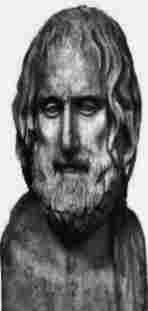 Euripides,
like Shakespeare, represented in his work the new moral and political movement
developing during his time. In the case of Euripides, he gave a portrait
of Athens towards the end of the 5th century BC. This was a period of enormous
intellectual discovery, a time when wisdom ranked as the highest earthly
accomplishment, alongside military and economic conquest. These changes
in society brought a new type of awareness to the writing of tragedy. Euripides
also shared the intellectual scepticism of the day and his plays challenged
the religious dogmas of the past. Euripides was more interested in the
thought and experience of the ordinary individual instead of the lives
of the heroes. He employed methods that would best suit his subject matter.
His plays had a chorus independent of the main action of the drama; he
used an explanatory prologue, which explained the events that preceded
the play. His plays were made up of detached episodes.
Euripides,
like Shakespeare, represented in his work the new moral and political movement
developing during his time. In the case of Euripides, he gave a portrait
of Athens towards the end of the 5th century BC. This was a period of enormous
intellectual discovery, a time when wisdom ranked as the highest earthly
accomplishment, alongside military and economic conquest. These changes
in society brought a new type of awareness to the writing of tragedy. Euripides
also shared the intellectual scepticism of the day and his plays challenged
the religious dogmas of the past. Euripides was more interested in the
thought and experience of the ordinary individual instead of the lives
of the heroes. He employed methods that would best suit his subject matter.
His plays had a chorus independent of the main action of the drama; he
used an explanatory prologue, which explained the events that preceded
the play. His plays were made up of detached episodes.
Shakespeare had a rather uncanny knowledge of the wellspring of human behaviour and he gave rendition to his profound understanding through poetic and dramatic means. To reveal the deepest levels of human motivation within his plays he utilised poetry, soliloquy, flashback or a play within a play. If he lived in our society, he would work with technologies that suit our 21st century panoramic vision. The modern world is one where mankind continually increases the multiplicity of relations between his and her fellows, and the world is characterised by immense technological constructions on a global scale.
In the micro-level, far more sophisticated representations can be made through film than on the stage. These include representations that require techniques like flashback, cross cutting and other special effects. These cinematic techniques were used by David Lean in Lawrence of Arabia to present biting social criticism and investigate the psychology of heroism.
 Films
like Close Encounters of the Third Kind, E.T.
: The Extra-Terrestrial and Jurassic Park respond to our
fascination for science fiction. They respond to the questions that puzzle
us, like the possibility of other beings in the universe and feeds our
sense of wonder. A film like Steven Spielberg’s Jurassic Park makes
us wonder how the world would be like with dinosaurs. This is the same
way in which the plays of Shakespeare questioned and intimately explored
the established cultural norms and ideas of his period.
Films
like Close Encounters of the Third Kind, E.T.
: The Extra-Terrestrial and Jurassic Park respond to our
fascination for science fiction. They respond to the questions that puzzle
us, like the possibility of other beings in the universe and feeds our
sense of wonder. A film like Steven Spielberg’s Jurassic Park makes
us wonder how the world would be like with dinosaurs. This is the same
way in which the plays of Shakespeare questioned and intimately explored
the established cultural norms and ideas of his period.
William Shakespeare’s audience was not only for the pundits, intellectuals or men of literary knowledge; his work was also produced, for the popular audience. Filmmakers like Oliver Stone, Stanley Kubrick and Spike Lee carry the baton that Shakespeare carried during the renaissance and Elizabethan age. In Coriolanus, Shakespeare showed the intricacies of a heroic figure who expects mandatory reverence from the masses because of the deeds he is supposed to have carried out for their benefit. The people showed him that in spite of all his victories he is still a citizen like them. David Lean did the same in Lawrence of Arabia. We see an enigmatic and eccentric hero, T.E. Lawrence, who achieves a great deal. As the film proceeds we penetrate the veneer and discover a man caught between two worlds and desires. Lawrence is an Englishman who embodies the norms and conventions of British society but who also has a desire to identify with the wildness and theatricality of the Arabs.
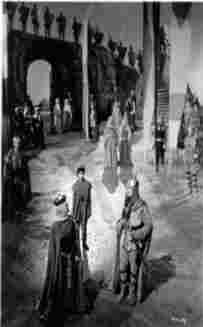 In
Macbeth,
Shakespeare portrays the tragedy of a man whose ambition and lust for power
turn him into a megalomaniac. In the film Nixon, Oliver Stone depicts
a similar character. Richard Nixon was a man who triumphed over so many
adverse conditions to become President of the United States of America.
While in office, his unscrupulousness and naked ambition brought about
his downfall. Othello is another character worthy of mention. In spite
of the fact that he was a Moor he was able to become a general in the Venetian
army. However, a man like this was unable to detect a simple subterfuge
contrived by his lieutenant, Lago. Spike Lee also showed us the naivety
and bravery of Malcolm X.
At the end of the film we see Malcolm X’s life as a journey of self-discovery.
The difference between these filmmakers and Shakespeare is that the former
use the cinematic medium while the latter used the stage to tell his story.
The similarity is that they used the medium that would reach the widest
audience.
In
Macbeth,
Shakespeare portrays the tragedy of a man whose ambition and lust for power
turn him into a megalomaniac. In the film Nixon, Oliver Stone depicts
a similar character. Richard Nixon was a man who triumphed over so many
adverse conditions to become President of the United States of America.
While in office, his unscrupulousness and naked ambition brought about
his downfall. Othello is another character worthy of mention. In spite
of the fact that he was a Moor he was able to become a general in the Venetian
army. However, a man like this was unable to detect a simple subterfuge
contrived by his lieutenant, Lago. Spike Lee also showed us the naivety
and bravery of Malcolm X.
At the end of the film we see Malcolm X’s life as a journey of self-discovery.
The difference between these filmmakers and Shakespeare is that the former
use the cinematic medium while the latter used the stage to tell his story.
The similarity is that they used the medium that would reach the widest
audience.
Some critics and literary pundits usually give the impression that Shakespeare regarded his work as a work of art. Some even believe that he was only concerned with aesthetics. They believe that Shakespeare wrote his plays with the idea that artistic intricacies or aesthetics was more important than public acceptance. This was not the case. Shakespeare had to please and attract the mass audience with a good work of art the way Oliver Stone and Steven Spielberg have to do nowadays. This is entirely different from Samuel Beckett or T.S. Eliot, who primarily write for those well versed and interested in literature.
 Shakespeare,
like most modern filmmakers with independent film companies, had a good
investment in his acting company called the Chamberlain’s Men, which was
later changed to the King’s Men. He also shared profits with two theatre
companies (the Globe and Blackfriars). The theatre companies held performances
and charged money the same way Twentieth Century Fox shows the films of
the aforementioned directors in cinemas and charge money. Like any business
venture they had to recoup the dividends from their investments, and the
only way they could do this was to attract as many people as possible.
This does not mean that literary and aesthetic qualities were not important
but like these modern filmmakers he was able to produce art of the highest
quality and retain the attention of the popular audience. One can produce
a work of the highest merit that is not exclusive. That is why Shakespeare’s
plays were not written in Latin or printed commercially during his lifetime.
Shakespeare,
like most modern filmmakers with independent film companies, had a good
investment in his acting company called the Chamberlain’s Men, which was
later changed to the King’s Men. He also shared profits with two theatre
companies (the Globe and Blackfriars). The theatre companies held performances
and charged money the same way Twentieth Century Fox shows the films of
the aforementioned directors in cinemas and charge money. Like any business
venture they had to recoup the dividends from their investments, and the
only way they could do this was to attract as many people as possible.
This does not mean that literary and aesthetic qualities were not important
but like these modern filmmakers he was able to produce art of the highest
quality and retain the attention of the popular audience. One can produce
a work of the highest merit that is not exclusive. That is why Shakespeare’s
plays were not written in Latin or printed commercially during his lifetime.
In every epoch there is a new state of affairs. The state of affairs often manifests itself in the work of the artist of the time. This involves political, social, economic, religious and ethical issues. That is why Shakespeare wrote about kings, plebeians, falling in love in adverse conditions and questioning human destiny. Modern filmmakers make films about politicians, business moguls, racism, homosexual love and vanity of fame. Where the theme of these plays used to be religion and taboos we now have sexual orientations and psychological problems. At present the popular audience is free from so many of the old constraints and conventions. They are aware of the manifold nature and depths of human personality. The political views of socialists, liberals and the psychological notions of people like Freud and Jung ushered these in.
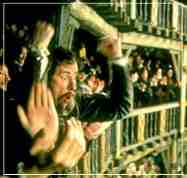 Artists
usually respond to these things. That is why during the Cold War many films
portrayed the ideological divide. The spy genre became very popular. The
point here is that the good artist is always caught in his or her historical
stream. The historical dimension in which he exists percolates every aspect
of his or her work, from their subject matter to the style and method of
rendition. They all try to tell the story of humankind. Aristotle shed
some light on this in his poetics; according to him, drama is not culture.
In his theory of catharsis he stated that through the pity and terror that
the audience feels these passions are purged from them. Although his theory
has been given more credence and development through psychoanalysis its
value lies in the fact that it sought to address the relationship between
audience and a work of art. The audience to which Aristotle referred was
the democratic Athenian audience not the monarchs, elite or philosophers.
Artists
usually respond to these things. That is why during the Cold War many films
portrayed the ideological divide. The spy genre became very popular. The
point here is that the good artist is always caught in his or her historical
stream. The historical dimension in which he exists percolates every aspect
of his or her work, from their subject matter to the style and method of
rendition. They all try to tell the story of humankind. Aristotle shed
some light on this in his poetics; according to him, drama is not culture.
In his theory of catharsis he stated that through the pity and terror that
the audience feels these passions are purged from them. Although his theory
has been given more credence and development through psychoanalysis its
value lies in the fact that it sought to address the relationship between
audience and a work of art. The audience to which Aristotle referred was
the democratic Athenian audience not the monarchs, elite or philosophers.
I hope critics would refrain from degrading art works because they have utilitarian value. We should give credit to artists who can produce works of art that embody the highest quality but also appeal to people from different strata of society.
If Shakespeare were alive today he would not be writing literary plays for the West End, he would be writing and directing films in Hollywood.
For some very useful links to material about Shakespeare in the movies and much more visit the
Mr William Shakespeare and the Internet website at:
|
|