
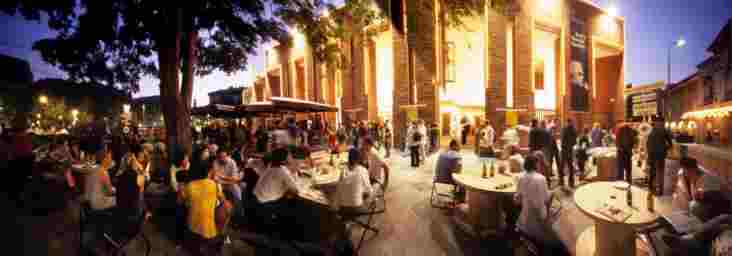
The 10th edition of the Milano Film Festival will run between 16 and 25 September 2005 at the Teatro Strehler and at the Teatro Studio, at the moats of the Castello Sforzesco and at the Cineteca Italiana – Spazio Oberdan.
With the peculiar energy of an event opening to the city and the world, the Milano Film Festival is ready to start up its 10th edition. Here is some advance information on the event. News and updates on the event, the juries, the films selected, the retrospective exhibitions and non-competing films and the side events will soon become available on the website www.milanofilmfestival.it.
Contents
Outline of the event
Overview of the 10th
edition
Supporters, Sponsors,
Collaborations
The Films
Juries and Awards
Tribute to “Le Festival
du Film Maudit” of Biarritz, 1949. The first
filmfestival for cinéma d’auteur
Overview of Videoclip
Musicale
Democratic Film
Exchange: the Milano Film Festival’s market
Holiday Project and the
“Filmmakers' House”
Notice on Audiovisiva
2005
Milano Film Festival: a
10-years-long story
Tickets, accreditation
cards and facilities
media@milanofilmfestival.it - tel. +39 - 02/713613
Outline of the event
The international film
competition is open to short and feature films of
any genre, format, length and language, produced
since January 1st, 2004. It will not divide the
films into categories.
The Milano Film Festival
diverges from other international film festivals
both for the quality of its contents and for its
innovation, and thanks to the tireless research for
high quality films it has explored the world far and
wide to bring unheard stories and voices in its
piazza.
The Milano Film Festival is a landmark for those authors who have chosen or are obliged to work far from the institutionalised sphere, and work instead in a more independent environment. The Milano Film Festival is also a complete project that can capture a cosmopolitan and diverse audience. As special meeting and confrontation place for the international film-making, the Milano Film Festival has set up an important moment of dialogue between public, directors and members of the film industry.
This idea of changing the rules of cinema, of giving a chance to talented unknown filmmakers and of selecting high quality work is becoming more and more popular. With its project of re-distribution, the Milano Film Festival represents a moment of high visibility for a project that goes on all year long.
Overview of the 10th edition
The 2005 edition is ready to start up with the peculiar energy typical of the opening of a great event, and is ready to gather the fruits of years of tireless work done with the more representative features of the contemporary film industry. The Milano Film Festival is proving to be a place of innovation in which the world and the town are working, winning the approval of the critics and the public.
Various projects and important agreements with the main cultural institutions of the city of Milan and national- and international-wide will be defined during this month in order to prepare a program of the festival respecting the intercultural aspect of it and the will to found new synergies in the contemporary artistic world.
The actual figures confirm an increased interest in this festival than in 2004, with nearly 1900 films from over 80 countries participating. Moreover, a special attention is paied to those productions scarcely considered by other international film festivals, made by countries producing their films without caring for any economic, political and social difficulties.
The 10th edition of the Milano Film Festival is also giving its attention to a chapter of the history of the cinema with a retrospective on "Le Festival du Film Maudit" of Biarritz, dated 1949. Other events will include an overview on the musical videoclips; and Incontri Italiani, seminars backing short films screenings to forums with Italian directors. The festival also reaffirms its interest for short films with the Salon des Refusés, a peculiar section organised by the non-selected filmmakers themselves.
Very important features of the Milano Film Festival program are the side-events: special screenings for students and children; concerts held on the parvis of the Teatro Strehler and in the moats of the Castello Sforzesco; meetings with the directors and the members of the juries, workshops and seminars. Not to forget the Democratic Film Exchange, an area for expositions and exchange: its program includes specific meetings for the members of the film industry, together with moments especially thought for the public of the festival. During this 10th edition, new space is gained by audiovisiva, the review of music, cinema and art, which today has its own identity and its own public.
As it has always been,
the festival will welcome a multitude of directors,
members of the film industry but also film lovers
from the world over. therefore, it has dedicated a
proper division of the organisation to the Holiday
Project. Its flagship will be the "Filmmakers'
House", temporary hostel that will host about 200
guests.
Supporters, Sponsors, Collaborations
Following the press conference held at the end of May made to explain the financial crisis situation, the Major of Milano has announced to the festival organisation a meeting with the three main Councillors - Culture, Sport & Young, Fashion & Big Events. This meeting brings the hope of a possible - and hopefully quick - solution of the problem.
This is because in 2005 the production cost of the Milano Film Festival will be over 400.000 Euro. Until now, only 3/4 of the total sum are granted by the sponsors, the institutions and the gains foreseen by the organisation. The Festival is still waiting to know if and how the Comune di Milano will solve the problem of the missing 100.000 Euro. While talking of economics, it is important to underline the important help and support given by privates, industries and collaborators that share the interest for the contents and the ideals of the Festival, and are participating to its making.
The 10th edition of the Milano Film Festival enjoys the collaboration of the Italian Ministry of Cultural Heritage - Cinema's Division, Provincia di Milano (Province of Milan), Regione Lombardia (Lombardy Region), and the Piccolo Teatro di Milano, as well as the support of Canon, main sponsor of the event, and other prestigious cultural and technical collaborators. Among the firsts, we must mention the Fondazione Cineteca Italiana - Spazio Oberdan; while the second group is represented by Corriere della Sera-Vivimilano, Amsa, Atm, Barco, Birra Moretti and Manifesto-Alias. New partnerships have been created with Raisat, lastminute.com, Moleskine, Next Exit and Antica Fattoria La Parrina.
The Films
The Milano Film
Festival has definitely become the crossroad where
different cultures and stories can gather, a
variegated portrait of international filmmaking.
Nearly 1900 films are registered to the competition:
1500 shorts and 400 feature films from over than 80
countries. First of all is Italy with 514 films,
followed by the United States, Germany, Great
Britain and France with 172, 128, 96 and 95 films.
The other films represent work from other countries
of Europe and Canada, Israel, Mexico and Russia, and
also from India, Argentina, Burkina Faso and
Lebanon. The films selected for the International
Competition (between 7 and 10 feature films and
between 40 and 50 shorts) are published below.
Many of this films will
be also part of the films' redistribution project,
the distribution chain created by esterni three
years ago, in order to promote the movies of young
independent authors.
Milano Film Festival 2005 – Feature Film Competition
Crash Test Dummies by Jörg Kalt (Austria 2005, 35mm, 93 min) (Cannes 2005 - Berlinale 2005)
Las Mantenidas sin sueños (Kept and Dreamless) by Martín Desalvo and Vera Fogwill, (Argentina/Spain/
Mars by Anna Melikian (Russia 2004, 35mm, 97 min) ("Panorama" at the Berlinale 2005)
Nekam achat mishtey eynay (Avenge but one of my two eyes) by Avi Mograbi (Israele/France 2005, 35mm, 104 min) (Cannes 2005 Out of Competition)
Play by Alicia Scherson (Chile 2005, 35mm, 105 min) (Tribeca Film Festival 2005)
Sivi kamion crvene boje (Red Coloured Grey Truck) by Srdjan Koljevic (Serbia and Montenegro/Slovenia/Germany 2004, 35mm, 105 min)
The Fall of Fujimori by Ellen Perry (USA 2005, Beta, 83 min) (Sundance Film Festival 2005)
Milano Film Festival 2005 - Short Film Competition
I apoliti stigmi (The Absolute Moment) by Luoizos Aslanidis (Greece, 2004, 14min) 31 years
Badgered by Sharon Colman (UK, 2005, 7min) 27 years
Bere il mare (To Drink The Sea) by Guido Tortorella (Italy, 2005, 5min) 28 years
Calling 911 by Jan de Bruin, (The Netherlands 2004, 6min) 28 years
Cataract by Sainath Choudhury (Germany, 2004, 8min) 29 years
Dialog by Stephen Irwin (UK, 2004, 6min) 25 years
Disparait,v by Andrei Severny (USA, 2005, 5min) 28 years
Empire by Edouard Salier (France, 2005, 4min) 29 years
Exoticore by Nicolas Provost (Belgium, 2004, 27min) 36 years
A falta de pan (Our Daily Bread) by Martin Rosete (Spain, 2005, 11min) 25 years
El otro sueño americano (The Other American Dream) by Enrique Arroyo (Mexico, 2004, 10min) 38 years
Godot by Arturo Sampson (Mexico, 2005, 14min) 27 years
God’s Early Work by Rory Bresnihan (Ireland, 2004, 11min) 33 years
Gopher Broke by Jeff Fowler (USA, 2004, 5min) 27 years
El gran salto (The Big Leap) by Belén Lemaitre (Mexico, 2005, 12min) 34 years
Grocery Store Wars by Louis Fox, Tate Hausman, Jonah Sachs (USA, 2005, 6min) 31 years
Hernafora Road Or The Distance To Sleep by Rachel Echenberg (Canada, 2004, 6min) 35 years
In religioso disagio by Massimiliano Maci Verdesca (Italy, 2005, 18min) 29 years
Johnny’s Gone Forever by Pekka Sassi (Finland, 2004, 1min) 36 years
The Meaning Of Life by Don Hertzfeldt (USA, 2005, 12min) 29 years
Motion Report by Verica Patrnogic (Serbia and Montenegro, 2004, 17min) 29 years
Naaber (The Neighbour) by Margit Keerdo (Estonia, 2004, 10min) 27 years
Nijnok (Tibbar) by Leo Wentink (The Netherlands, 2004, 12min) 27 years
Noc v hoteli (Night In A Hotel) by Matus Libovic (Slovakia, 2004, 8min) 29 years
Ovest by Giorgio Carella (Italy, 2005, 26min) 31 years
Play For Three Actors by Olexsandr Shmygun (Ukraine, 2004, 10min) 29 years
Reality Shock Disorder by Nadia Tabbara (USA, 2004, 7min) 22 years
La ruta natural (The Natural Route) by Alex Pastor (Spain, 2004, 11min) 24 years
Scen nr:6882 UR mitt Liv (Autobiographical Scene Number 6882) by Ruben Ostlund (Sweden, 2005, 8min) 29 years
Siempre quise trabajar en una fàbrica (I Always Wanted To Work In A Factory) by Esteban Crespo Garcia (Spain, 2005, 9min) 34 years
Spattans Vag (Way Of The Flounder) by Johannes Stjarne Nilsson, Ola Simonsson (Sweden, 2005, 10min) 36 years
Specialised Technicians Required: Being Luis Porcar by M. Saiz (The Netherlands, 2004, 1min) 44 years
Stop! by Mathijs Geijskes (The Netherlands, 2004, 6min) 35 years
Suknièkáø (Skirter) by Milos Tomic (Czech Republic, 2005, 3min) 29 years
The Ten Steps by Brendan Muldowney (Ireland, 2004, 10min) 36 years
Testen (The Test) by Ole Giæver (Norway, 2005, 13min) 28 years
Toz (Dust) by Halit Fatih Kizilgok (Turkey, 2005, 14min) 25 years
Die Überraschung (The Surprise) by Lancelot Von Naso (Germany, 2004, 10min) 29 years
Uyuni by Andre Denegri (Argentina, 2005, 8min) 30 years
Vonaton (On A Train) by Barnabàs Tòth (Hungary, 2004, 11min) 28 years
Wrong by Tom Geens (UK, 2005, 9min) 35 years
You Are 10 Years Old by
Paul Leyton (UK, 2004, 12min) 38 years
Awards
Feature Film Jury Award
By tradition, the prize
will be awarded by personalities working in the
cultural field both in Italy and abroad: filmmakers
and actors, but also writers, musicians and various
cultural operators. Of the past editions it is
important to mention Maurizio Maggiani and Art
Spiegelman, Luca Bigazzi and Niccolò Ammaniti,
Yolanda Mukagasana, Angela Ricci Lucchi and Yervant
Gianikian, until Benny Morris and Jean Jaques
Wunenburger.
Short Film Jury Award
The prize will be awarded by personalities working mainly in the cinema, or more generally in the visual arts' field. Usually, it is made from a group of well-trained persons, used to working together: for example the editorial office of a magazine, the members of a cinematographer association or a syndicate. Of the past edition, it is important to mention the Associazione Nazionali Montatori, the editorial staff of Duellanti, Alias and, last year, of the editor minimum fax.
Aprile Award
The prize will be awarded as usual by esterni, the Milano Film Festival's organisers, to a short or feature film.
Audience Award
This prize is awarded by the audience, that evaluates the films competing: after the screening, the audience will assign a coin to the preferred short. The short receiving the highest number of coins wins the entire sum.
Filmmakers’ Award
Unique award, assigned by the filmmakers to the most significative film of the 10th edition.
Tribute to the “Festival du Film Maudit” of Biarritz, 1949
Last year the Milano Film Festival has paid a tribute to François Truffaut, in collaboration with the Fondazione Cineteca Italiana – Spazio Oberdan. This year, the Festival looks back on a page of the history of cinema with a retrospective on the Festival du Film Maudit, which took place in Biarritz in 1949. That festival had been promoted by the ciné-club “Objectif 49”, and directed by Jean Cocteau, who was backed by Bazin, Rivette and Chabrol. The Festival had been the first meeting of this group of film lovers, from which afterwards were born the Cahiers du Cinéma. It has also been considered as the first review of cinéma d’auteur of the history.
The Milano Film
Festival pays a tribute to the Festival of Biarritz
because in this one it is possible to find the same
quest for discovering new cinematographic talents –
especially if considered “doomed”. The Festival
presents a significative selection of the original
program: starting with “Initiation a la danse des
possédés”, by Jean Rouch – winner of the 1949
edition – and going on with “Ossessione”,
epoch-making beginning by Luchino Visconti and
manifesto of the post-war realism; from the
chef-d’oeuvres of the French cinéma by Vigo, Renoir
and Bresson, to "They live by night”,an
important film by the American director Nicholas
Ray.
Overview on the Musical Videoclip
The Milano Film
Festival helps for the confrontation of different
kinds of art, and it has the role of observatory
that every year documents and saves the evolution of
the diversified world of the independent filmmaking.
During this 10th edition, an overview on the Musical
videoclips has been set up. This event wants to
present a new kind of art, with a program rich in
musical videoclip screenings, meetings and round
tables with artists and producers, in order to
analyse the main aspects of the international
production and distribution market.
Democratic Film Exchange: the Milano Film Festival’s market
The Democratic Film
Exchange is an event that takes place together with
the Milano Film Festival. Its main aim is to create
an area of meeting and exchange between the film
producers, the promoters and the sellers. In this
market , trends and values are self-defined by
ideas, works and ability. This year the Democratic
Film Exchange’s exposition area will be divided in
four zones: promotion, meetings, screenings and
workshops. The Democratic Film Exchange is mainly
intended for experts, however it will also
contemplate moments especially thought for the
accreditation card holders. Its main aim is to
promote meetings and new relationships, so that
sectors long been apart can eventually meet and
create new projects for a quality cinema.
Holiday Project and the “Filmmakers’ House”
Like last year, the Milano Film Festival is setting the “Filmmakers’ House”, a temporary hostel especially to host directors, members of the film industry that will reach Milan. The Filmmakers’ House has already been experimented during the last edition of the Festival, and its organisation has been improved under the name of Designers’ House during the International Furniture Fair. This hostel was born thanks to esterni, and it wanted to be an adequate answer to the indifference of the city, its high hotel costs and its lack of meeting areas.
esterni, together with industries working in the design sphere, has reinvented and decorated a setting in Milan, in order to create an area where it is possible to socialise and meet other cultures; where filmmakers and the public are together. This has been achieved thanks to a varied program, made of events, workshops, concerts and screenings. The cost of the hostel is of 25 €, and it will include also the accreditation card for the Festival.
Thanks to the Festival and its Filmmakers’ House, Milan becomes a real touristic location, affordable and even competitive. Thanks to agreements with the tour operators, the air companies and the railroads and to conventions made with museums and other cultural sites, the public will be able to travel and to really enjoy its stay in the city.
Notice on Audiovisiva 2005
Conceived as a parallel event of the Milano Film Festival, and presented during September 2003, this year audiovisiva becomes independent, and will run between September 29th and October 2nd in the moats of the Castello Sforzesco. This event links music, cinema, art and entertainment, and is a laboratory that accepts every kind of expression and artistic contamination, together with the participation of the most important independent record companies.
Milano Film Festival: a 10-years-long story
A deconsecrated church,
only a few meters from the Piccolo Teatro, only a
few hundreds of persons present, mainly friends and
film lovers, 6 videos made by young Italian
filmmakers and passionate debates on the national
film industry: it is 1995, the first edition of the
Milano Film Festival.
Year after year, the
event has grown, and still today the Milano Film
Festival is a project in evolution, thanks to all
those who have dedicated to it their time and
professionally.
Tickets, accreditation cards and facilities
The Milano Film Festival has already started its accreditation cards campaign, with special facilities for several categories. For this 10th edition, the Milano Film Festival has organised an advance sale at a special price, available up to August 15th for university students, members of the film industry and over 65 (15 €). Journalists and students of high school can ask for a free accreditation.
The accreditation card
can be bought online on the website www.milanofilmfestival.it, and
permits to participate to all screenings (both in
competition and out of competition) and to all the
events that will take place at the Piccolo Teatro
and at the Castello Sforzesco
http://www.braindumps.com/HP0-Y32.htm
http://www.actualtests.com/exam-220-801.htm
http://www.pass4sure.org/SAP/C_TSCM52_66.html
http://www.test-king.com/training/six-sigma-black-belt-training.htm
|
|