

A glimpse through the 'Development' sections in this book show that turning a comic book into a film is no simple transfer from one medium to another. Nearly every film noted by Hughes seems to have gone through piles of re-writes and gangs of script writers.
The power of comic books is that they remain in our childhood memories and they can generate huge cult followings in adults as well. As a consequence there's potentially a huge market for films based on comic books if you get it right. Here Hughes concentrates on twenty films that have tried to tap into this market. He starts with Superman: The Movie (1978), which respected it's comic book origins and realistically put the world of Superman on the screen. Christopher Reeve played it straight whilst his arch enemies were dangerously comic. The Superman film franchise went steadily downhill as budgets became lower and the special effects became less special. Nonetheless, it showed that comic books could spell box office gold if handled correctly.
 Hughes
skips a decade to look at the classic example of anime Akira (1988)
(see Anime Poster Art
)and then to 1989's Batman. After those good examples he hits
probably the lowest rungs of such adaptions with 1990's Dick Tracey
and those terrible Teenage Mutant Ninja Turtles. He comes up to
date with
Road to
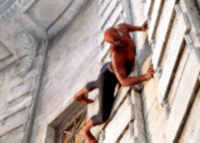
Perdition and Spider-Man.
In the former example the film-makers tried to hide it's origins by saying
it was based on a novel but pressure from comics fans via the good ole
Internet forced them to put '...based on the Graphic Novel...' This shows
that comic books are still seen in some quarters as being at the bottom
of the cultural pit. Hughes ends with Ang Lee's Hulk
(2003) that might have given a much needed cultural boost to the medium
but it could be a lost cause!
Hughes
skips a decade to look at the classic example of anime Akira (1988)
(see Anime Poster Art
)and then to 1989's Batman. After those good examples he hits
probably the lowest rungs of such adaptions with 1990's Dick Tracey
and those terrible Teenage Mutant Ninja Turtles. He comes up to
date with
Road to
Perdition and Spider-Man.
In the former example the film-makers tried to hide it's origins by saying
it was based on a novel but pressure from comics fans via the good ole
Internet forced them to put '...based on the Graphic Novel...' This shows
that comic books are still seen in some quarters as being at the bottom
of the cultural pit. Hughes ends with Ang Lee's Hulk
(2003) that might have given a much needed cultural boost to the medium
but it could be a lost cause!
For every film the information is put into sections that provides the cast list; uncredited cast list; description of the title sequence; synopsis; origins of the source material; previous appearances of the comic book characters in films or TV; casting, production; costume fitting; music; classic quotes; deleted scenes; trailers; posters; tag-line; what the papers said; box office; awards; controversy; trivia; apocrypha; sequels and spun-offs; future incarnations; DVD availability; final analysis and expert witness.
This suggests that this is merely a book of short and unsatisfactory tit-bits of information but Hughes provides at least one or two pages of text for many sections offering enough material for fans or the casual reader. So you can simply use it as a handy guide or have a good read of what takes your fancy. To help the more serious fan he provides an index and an index of quotations, which is fully referenced.
Since comic books are being increasingly used by Hollywood for inspiration Comic Book Movies shows what has gone before and what we can expect in the future.
Whether you like comic books or Hollywood
blockbusters Hughes goes beyond the hype and glitter to offer a first rate
guide to how the two mediums have danced together to create movie magic.
|
|